As a rough guide, toddlers start with chunky wooden puzzles of a few large pieces, three to four year olds manage around 12 to 24 pieces, five to six year olds around 48 to 100, seven to nine year olds 100 to 200, and children of ten and up can move on to 250 to 550 pieces. 1000-piece puzzles are a family or teen project. Experience matters more than age, so if a puzzle is finished in minutes, go up a step, and if it causes frustration, go down one.
Puzzles are also one of the best screen-free activities for cooler evenings at home, because the whole family can join in. Here is how to choose the right one.
Contents
- Toddlers: chunky and pegged puzzles
- Ages 3 to 6: first jigsaws
- Ages 6 to 9: 100 to 250 pieces
- Ages 10 and up: 550 to 1000 pieces
- Tips that help at every age
- Common questions
Toddlers: chunky and pegged puzzles
Before jigsaws, toddlers learn to match a shape to a space. Chunky wooden puzzles are easy to grip and hard to lose.
- The Hape Wooden Chunky Number Puzzle and Hape Chunky Alphabet Puzzle add early numbers and letters.
- The Hape Wooden Creative Peg Puzzle uses pegged posts. Start with one post at a time, then add the rest.
More in Wooden and Pegged Puzzles.
Ages 3 to 6: first jigsaws
Start with large pieces and a picture your child loves, because a favourite subject keeps them going. Floor puzzles are a good idea at this age: big pieces, lots of space and a picture they can lie on.
The Hape Human Body Jigsaw Puzzle has 60 pieces plus wooden body parts, so it doubles as a first anatomy lesson. Monster truck fans can try the Eurographics Monster Jam Grave Digger 100-piece puzzle, which comes in a reusable lunch bag.
Ages 6 to 9: 100 to 250 pieces
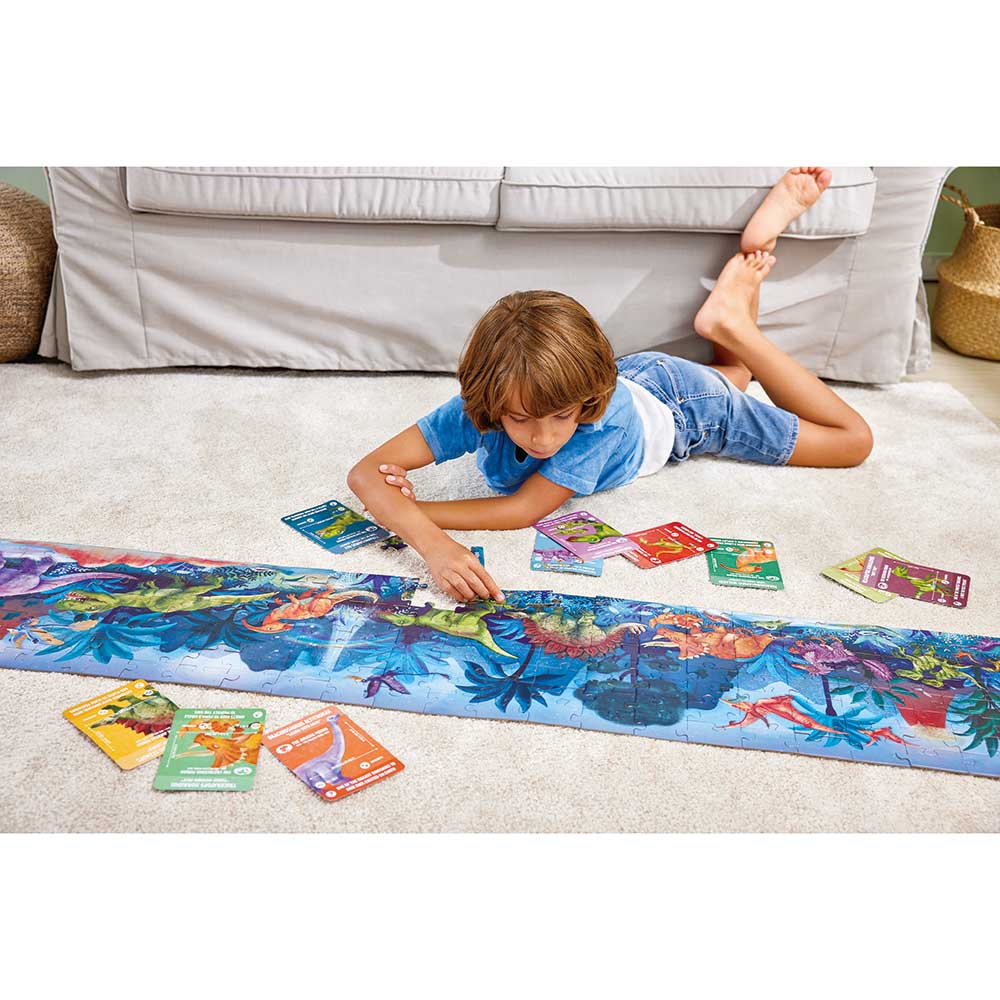
This is where puzzles become a real project. The Hape Glow in the Dark Dinosaur Puzzle has 200 pieces and stretches to around 1.5 metres, with dinosaur skeletons that glow when the lights go off, which makes finishing it twice as satisfying.
Wildlife puzzles at 250 pieces, such as Eurographics Giraffes and Eurographics Red Pandas, are a good bridge to adult-style puzzles.
Ages 10 and up: 550 to 1000 pieces
The Eurographics Map of the World 550-piece puzzle in a tin is a good step up, and doubles as a geography lesson. For a full family project, the 1000-piece Map of the World or the 1000-piece Coral Reef can live on a side table for a week or two.
Tips that help at every age
- Edges first. Find the straight-edged pieces and build the frame.
- Sort by colour. Small trays or bowls help.
- Keep the box picture visible. It's a guide, not cheating.
- Stop before frustration. A half-finished puzzle on the table invites people back.
- Pick the right spot. A board or tray you can slide away saves bigger puzzles from being cleared up too early.
Browse all puzzles in Jigsaw Puzzles.
Common questions
How many puzzle pieces should a 5 year old do?
Most five year olds manage puzzles of around 48 to 100 pieces, especially with large pieces and a picture they love. Experienced puzzlers may be ready for more, so step up when puzzles are finished quickly.
What puzzle is best for a 2 year old?
Chunky wooden puzzles and pegged puzzles with a few large pieces suit two year olds best, because they are easy to grip and teach shape matching.
What age can a child do a 1000-piece puzzle?
Most children are ready for 1000 pieces from around ten to twelve, often working alongside an adult. Many families treat 1000-piece puzzles as a shared project.
Are puzzles good for children?
Yes. Puzzles build patience, problem-solving and hand-eye coordination, and they are an easy screen-free activity the whole family can share.
Keep reading
- Magnetic Tiles and Magnetic Blocks: A Parent's Buying Guide by Age, Piece Count and Safety
- Musical Toys for Kids by Age: From First Rattles to Drum Kits and Keyboards
- 8 Significant Benefits of Puzzles for Early Childhood Development
- Family Game Night in the UAE: The Best Card and Board Games by Age
- Best Educational Toys in UAE: An Age-by-Age Guide for Parents